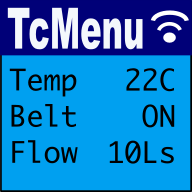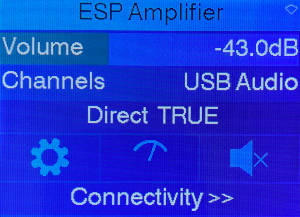
TcMenu is a modular, IoT ready multi level menu library for Arduino, mbed, Pico-SDK, mbed and many more platforms supporting many input, display and IoT / remote interfaces. It makes presenting configuration, status and operational information much easier. Apache licensed and therefore safe for commercial use.
Start by working out what information and state is to be represented in the Designer UI. Take inspiration from the Arduino menu examples. Then, run Code Generator which outputs code for the selected board ready for use in an IDE.
Embedded Menu for Arduino
Web based menu designer:
- Start web based TcMenu Turbo designer
- Documentation for Web based TcMenu Turbo
- Get help from the C++/Java/Flutter consultants who wrote tcMenu
Using Tc menu library:
- TcMenu library examples and starter projects
- Guide to working with Menu Item Types
- Code Generator and plugins guide
- EEPROM integration with menus
- Setting up IO expanders in designer
- Authentication - securing sub-menus and remote connections
- Creating and generating menus using the CLI
- MenuManager and Menu iteration Guide
- Writing a multi-language locale based menu
- Useful helper functions in tcUtil.h
- Embedded library reference documentation
- GitHub Repository - for source and releases
- Major code level differences between library versions
Desktop version of the menu designer
Menu library for vendor environments using CMake (non Arduino)
You can use PicoSDK without requiring Arduino framework at all. The opensource version of IoAbstraction supports PicoSDK directly for nearly all cases. Our direct support generally works via CMake, and the starting point for these builds is our CMake based project in the cmakeProject directory. If you're using this commercially, please contact us for commercial support.
We can support other platforms such as ESP-IDF and STM32 using this approach commercially.
Working with displays
- Working with display renderers
- Creating and using TitleWidgets and bitmaps
- Themes, properties, grids and card layout
- How to define fonts within theme configuration
- Taking over the display and dashboards
Display plugins
- DfRobot LCD shield driver
- LiquidCrystal / hd44780 display driver
- AdaFruit_GFX driver - ILI9341, ST7735, Nokia5110 etc
- AdaFruit_GFX NativeCpp/PicoSDK/mbed RTOS for OLED - SSD1306, SH1106
- U8g2 driver - for SSD1306, SH1106 etc
- SSD1306Ascii low memory driver - for SSD1306 on Uno
- TFT_eSPI driver with double buffering
- STM32 LTDC mbed frame buffer with touch
- Customising a display driver
Theme plugins
- OLED/Mono themes both bordered and inverse
- Color themes for most display sizes
- Dark themes for most display sizes
Input plugins
- Rotary encoder, buttons or joystick
- Using a matrix keyboard to control menu
- DfRobot analog pin keypad input
- Resistive touch screen menu integration
- XPT2046 and FT6206 touch screen menu integration
- Capacitive Touch-pad sensor input
Specific for Java on Raspberry PI or embedded Linux
We have tested the designer application and embedCONTROL on a Raspberry PI, so not only can you make a Raspberry PI embedded application, you can even run designer and embedCONTROL on an RPI as well! The Java API and EmbedControl libraries are fully JavaDoc commented.
- Creating an embedded Java menu application for RaspberryPI
- Display menu on JavaFX/OpenJDK on Raspberry PI
- Menu In Menu - Embed remote menus into a single app
Remotely controlling your menu / IoT
 Our menu designer can build in IoT capabilities near automatically (on Ethernet2, UipEthernet (ENC28J60), ESP8266-WiFi, ESP32-WiFi, Bluetooth and Serial). Allowing you to remotely monitor and control your device using Embed Control with minimal effort.
However, to write your own remote monitoring, use our Java Remote API, TypeScript/JavaScript API, C#/DotNet API, or the Python API. Coming soon is a Dart API.
- embedCONTROL UI documentation
- Menu library remote connectivity tutorial
- IoT monitoring and control using the Java API
- TagVal protocol documentation
IoT and Remote control plugins
- Serial driver for usb, rs232 and Bluetooth control
- Ethernet driver for Ethernet2 and Uip control
- WiFi driver for ESP32 and ESP8266 control
- Simhub connector for tcMenu using custom serial protocol
- Embedded Java plugin for ethernet/WiFi remote
- Serving up embedCONTROL in a web browser
- Device acts as client to remote server
Creating / building / modifying plugins
Menu library remote connectivity tutorial
TcMenu has considerable out of the box remote connectivity on both Arduino and mbed. With support for Ethernet2 library, UipEthernet library, ESP8266 WiFi, ESP32 WiFi and Serial (including Bluetooth Serial) to name a few connectors. Please pay close attention to the following classes in the reference documentation as they are mentioned frequently here: BaseRemoteServerConnection in reference docs TcMenuRemoteService in reference docs...
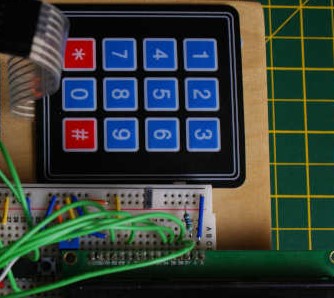
Menu control using a matrix keyboard
Using a matrix keyboard with TcMenu is straightforward, we use the IoAbstraction Keyboard Manager component to handle the keyboard, along with a custom listener for tcMenu that feeds the menu manager with appropriate events upon key presses. This library allows you to connect your keyboard either using Arduino pins, or any supported IoAbstraction such as the I2C PCF8574 or MCP23017....
TcMenu Designer UI - worked example
Worked example: Building a timer For this example we will create a menu that has two top level menu items; a counter which counts down from the selected value, and a Boolean switch that turns on or off the countdown. It will also have a submenu with one menu item to control the notification method. So lets draw this out conceptually...
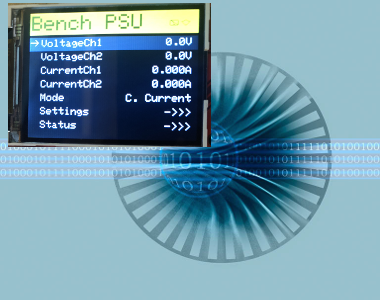
Working with Menu Item types in tcMenu
Many embedded applications need to present status and allow users to manage settings. TcMenu provides first class support for both presenting status and managing configuration/settings using menu items. It is possible to use with and without a local user interface. All menu item types can be accessed remotely, and we have a remote API, UI solutions, and connectors to commercial IoT...
Connect to a remote server plug-in for tcMenu library
In this guide we show how to setup and use the remote server communication plugin for tcMenu. This plugin allows you to reverse the normal connection direction, and have the API side be a server accepting connections from devices. You simply configure the address and port that the connector should connect with, and ensure there is an API listening at the...
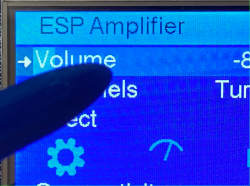
Touch screen menu calibration
There are several touch plugins in TcMenu and they all have support for controlling calibration and orientation. The calibration UI is presently at preview quality although works for many cases. Below is an image showing the common options to most touch plugins. Touch screen calibration The touch screen calibration option provides a very simple UI and calibration load and save feature...

STM32/mbed LTDC Frame buffer menu touch driver
STM32 LTDC Frame buffer touch screen support It is possible to generate an impressive menu application using LTDC via the BSP functions. It has been tested to work fully with mbed on a STM32F429 Disc1 with ILI9341 and touch, but also should work with STM32duino and other screens given the right parameters and setup. IMPORTANT NOTE: It should be noted...
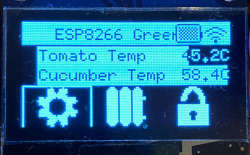
Using SSD1306 to generate a Uno / low memory multi level OLED menu
It is possible to build multi level menus with an OLED display on an Arduino Uno or other low memory board provided you use SSD1306Ascii instead of the U8G2 library, as it uses a lot less memory at the cost of some flexibility. We've tested it with regular I2C SH1106 OLED display units and it works absolutely fine. To use this...
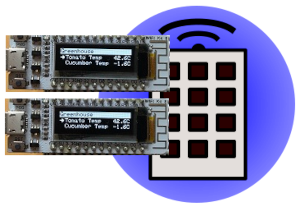
Menu In Menu support for embedded Java on Linux / Raspberry PI
You can combine many menu structures from different devices into a single menu, this works by each remote menu being represented by a object being associated with a and a . It maps the remote menu into an unused ID range on the local device and even handles dialog commands. Available from version 2.3 of tcMenu Designer and API....
Control menus with embedCONTROL.JS from a webserver
Available from 2.3 onwards. On larger embedded devices you can serve up embedCONTROL.JS from a web browser. It allows you to remotely control and monitor the menu items from a web page on any device that can run a web browser. It is a single page web application based on React.JS. It supports the most important functions from the full embedCONTROL...
These may be of interest
- Similar - Write XML with GroovyBuilder
- Similar - Wrapping JFreeChart as a Groovy builder
- Similar - Reading XML in groovy using XmlParser
- Similar - Generate an ATOM feed with GroovyBuilder
- Similar - Groovychart Bar chart with fixed colour

Supporting us
We maintain several popular embedded projects and work hard to make them even better. If you're looking for commercial services, please do consider us.
Alternatively, you can buy us a coffee to say thanks.
Sharing links
Learn about TcMenu
We build and maintain an embedded menu designer and framework that works on many platforms.