Securing sub-menus and remote connections with an Authenticator
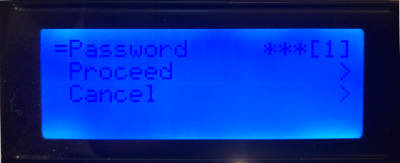
You can secure both sub-menu items and remote connections using an . In summary, when an is present on any attempt to show a secure sub menu will result in a dialog asking for the pin; only proceeding to display the sub menu if the pin matches the on in . In addition, all remote/IoT connections will only be...
SPI and I2C/Wire abstraction that works on Arduino, mbed, PicoSDK
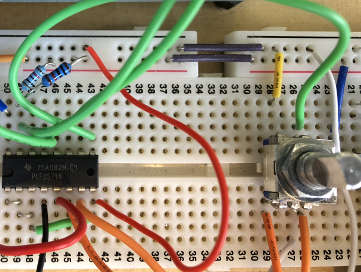
IoAbstraction has core I2C/Wire and SPI functionality provided by several functions, these abstract the use of I2C and SPI over Arduino, mbed, PicoSDK and other supported platforms. Over time the implementation of these will be improved, such that asynchronous behaviour will be possible on certain boards. Prior to 2.0, we had conditional I2C code scattered around the project, but now nearly...
Simple Collection - btree list
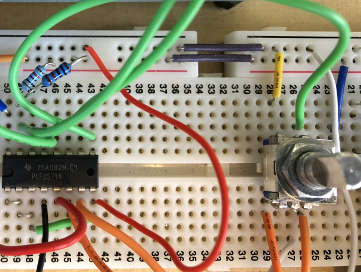
IoAbstraction contains a very simple collection that is relatively lightweight and works on a wide range of boards. It is a btree list that provides ordering and list storage. It works on anything from Arduino Uno upwards! It's memory usage is very configurable, and the way it resizes arrays is also configurable too. You can set the initial size if you...
Simple Collection - Thread safe circular buffer
Circular buffer provides an easy way to interact with events that take place on another thread or in an interrupt, it is not very efficient when used on a single thread because it uses atomic operations to ensure consistency of the buffer. It is an advanced collection for use by users that understand threading and writing interrupt safe code. There are...
Taking over the display from a renderer
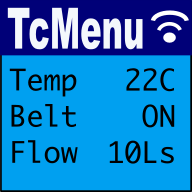
TcMenu allows you to take over the display from the renderer very easily, and once you own the display, you will be called back at regular intervals by the rendering class. During the time that you've taken over the display or presented a dashboard, you're responsible for the user input and rendering. Please note that you should never update the screen...
MenuManager and menu iteration
contains the functions to manage menu items, there is a global instance of this class called on Arduino and mbed boards. Here we present the most commonly used features, check out the reference docs for more details. There are a lot of iteration helper functions that can be used to navigate through menu structures. These are described further down...

LiquidCystalIO with PCF8574 i2c backpack
An I2C LCD backpack based on the PCF8574 chip provides an easy way to get started with LiquidCrystalIO on most Arduino boards. It is usually in one of two configurations as listed below. This library works correctly with the display and even has a shorthand way of creating the LCD for this case. Connectivity combinations for i2c backpacks Pin Option1 Option2...

Task Manager Low Power example for SAMD boards
There are often cases when you'll need to run a micro controller from a battery power source. Unlike when running from mains power, every milli-amp matters. In these cases IoAbstraction's task manager is able to integrate easily with most low power libraries. Task manager works by repeatedly calling the function within or , during each loop task manager evaluates...
Rendering menus to TFT, LCD and OLED using tcMenu
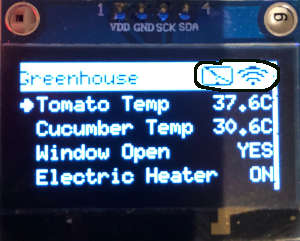
TcMenu supports a wide range of rendering devices, from HD44780 based units using our LiquidCrystal fork through to mono OLEDs and full colour TFT displays using Adafruit_GFX and TFT_eSPI library. Over to the left you see an example of rendering to OLED device with title widgets. You can also easily take over the display to draw your own screen at any...
Menu library remote connectivity tutorial
TcMenu has considerable out of the box remote connectivity on both Arduino and mbed. With support for Ethernet2 library, UipEthernet library, ESP8266 WiFi, ESP32 WiFi and Serial (including Bluetooth Serial) to name a few connectors. Please pay close attention to the following classes in the reference documentation as they are mentioned frequently here: BaseRemoteServerConnection in reference docs TcMenuRemoteService in reference docs...
These may be of interest
- Similar - Belt clamps - what a find!
- Similar - Hand-built router table for the workshop
- Similar - Things learnt from building the first turntable.
- Similar - HI-FI Collective cable kit 6
- Similar - Orbit, a high performance DIY turntable.

Supporting us
We maintain several popular embedded projects and work hard to make them even better. If you're looking for commercial services, please do consider us.
Alternatively, you can buy us a coffee to say thanks.
Sharing links
Learn about TcMenu
We build and maintain an embedded menu designer and framework that works on many platforms.