TheCodersCorner.com items tagged with arduino.

Unit testing embedded and Arduino projects
When you've got more than the simplest embedded program for Arduino (or any other framework), it becomes much harder to test that it's working properly by purely running it. For something like Blink, testing is simple because all we need to do is upload it and see the LED turn on and off; there's little risk of missing anything significant. However,...
Evaluating static memory (SRAM) usage in an Arduino Sketch - Part 1
While writing IoAbstraction and TcMenu, I noticed that SRAM memory usage seemed to increase at a rate greater than what seemed right by static evaluation of all the objects I had created. This will become a series of articles on the subject of efficiency in microcontroller environments. In this part, we'll look at how to evaluate memory on your device, and...
TcMenu - Overview and quick start
Menu library and designer for Arduino and mbed TcMenu is a modular, IoT ready multi-level menu library for Arduino and mbed supporting many input, display and IoT / remote interfaces. It makes presenting configuration, status and operational information much easier. First, you design your menu structure using the designer UI, then using the code generator you convert your menu structure into...
Consider using Arduino for your new product
Edited 02/2026: Over the time I wrote this around 7 years ago, things have really moved on. Now many low volume IoT solutions do ship from what's effectively Arduino, or similar. I was proven right and even native chains have all moved toward simplified builds with CMake and helpful starting points. PlatformIO is heavily used and productionizes Arduino builds. CLion by...
Timed blink - IO Abstraction library example
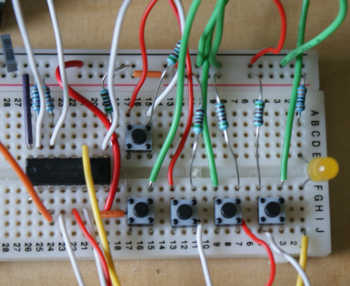
Timed blink is a version of well known Arduino blink example that is shipped with the standard IDE, but is redesigned to use the Abstraction and timer library. Example circuit for the code is exactly the same a blink, and if you use the inbuilt LED pin (which it does by default) then there's no need to build any circuit...
Checking if 7segment display is common anode or cathode
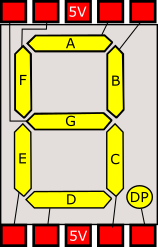
If you've got a 7 segment display but are not sure if it is common anode or common cathode, then you need to check the polarity of the display. This is easily done with a low voltage supply (9V or less) from a battery, bench PSU or Arduino board. Firstly and before anything else, connect a 1K resistor between the common...
Using menu designer as an embedded initializer
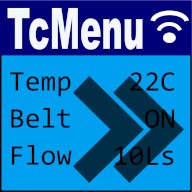
You can choose to use tcMenu embedded menu designer as an initializer. This means that you can add new menu items without having to rebuild your project. This makes it much easier to use tcMenu. In the initializer case, the intended workflow is to create a project that works with a given display driver and input configuration and then manage the...
Multi language locale based menu for Arduino and mbed
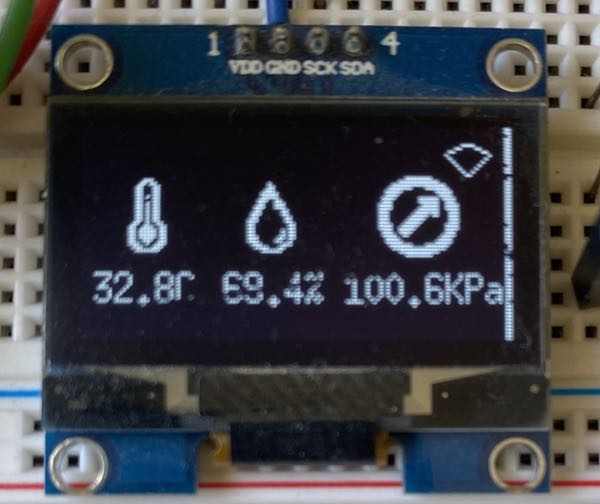
Your embedded menu project can use Java-style resource bundles . You define translated strings in an directory, refer to those strings from your menu definition or C++ code, and the code generator creates C++ headers for the selected language. We enable the support by adding an directory within the project that has at least a properties file named ...

Embedded Java for Raspberry PI and other embedded Linux
Embedded Java for Raspberry PI and Linux works slightly differently to the C++ project creator in that it is a starter project with a webserver and JavaFX UI built in. After project creation you then go about configuring the project how you like, and the designer will keep the menu callbacks up-to-date in the controller, the menu definitions that make up...
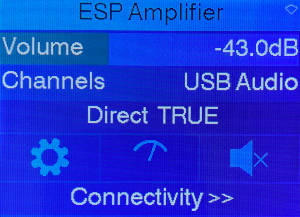
Rendering using themes - properties, grids and icons
Most display plugins can be customized using TcThemeBuilder, a utility class that allows you to simply configure fonts, colors, spacing, grids and icons. To the left you can see cool-blue theme with a multi-column grid layout. Grids allow for multi-column menus by breaking rows up into multiple columns. You can configure graphical settings at the default level, or even override settings...
These may be of interest
- Similar - Write XML with GroovyBuilder
- Similar - Wrapping JFreeChart as a Groovy builder
- Similar - Reading XML in groovy using XmlParser
- Similar - Generate an ATOM feed with GroovyBuilder
- Similar - Groovychart Bar chart with fixed colour

Supporting us
We maintain several popular embedded projects and work hard to make them even better. If you're looking for commercial services, please do consider us.
Alternatively, you can buy us a coffee to say thanks.
Sharing links
Learn about TcMenu
We build and maintain an embedded menu designer and framework that works on many platforms.