
TaskManagerIO
Loading...
Searching...
No Matches
#include <MockTaskManager.h>
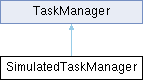
Public Member Functions | |
| void | reset () |
| void | yieldForMicros (uint32_t micros) override |
| int | getNumberOfYieldCalls () |
| uint32_t | getYieldTime (int i) |
| int | getMaxTaskNo () |
| InterruptFn | getInterruptFunction () |
| Public Member Functions inherited from TaskManager | |
| TaskManager () | |
| taskid_t | execute (TimerFn workToDo) |
| taskid_t | execute (Executable *execToDo, bool deleteWhenDone=false) |
| taskid_t | schedule (const TimePeriod &when, TimerFn timerFunction) |
| taskid_t | schedule (const TimePeriod &when, Executable *execRef, bool deleteWhenDone=false) |
| taskid_t | scheduleOnce (uint32_t when, TimerFn timerFunction, TimerUnit timeUnit=TIME_MILLIS) |
| taskid_t | scheduleOnce (uint32_t when, Executable *execRef, TimerUnit timeUnit=TIME_MILLIS, bool deleteWhenDone=false) |
| taskid_t | scheduleFixedRate (uint32_t when, TimerFn timerFunction, TimerUnit timeUnit=TIME_MILLIS) |
| taskid_t | scheduleFixedRate (uint32_t when, Executable *execRef, TimerUnit timeUnit=TIME_MILLIS, bool deleteWhenDone=false) |
| taskid_t | registerEvent (BaseEvent *eventToAdd, bool deleteWhenDone=false) |
| ISR_ATTR void | triggerEvents () |
| void | addInterrupt (InterruptAbstraction *interruptAbstraction, pintype_t pin, uint8_t mode) |
| void | setInterruptCallback (InterruptFn handler) |
| void | cancelTask (taskid_t task) |
| void | setTaskEnabled (taskid_t task, bool ena) |
| void | runLoop () |
| void | reset () |
| char * | checkAvailableSlots (char *slotData, size_t slotDataSize) const |
| TimerTask * | getFirstTask () |
| TimerTask * | getTask (taskid_t task) |
| uint32_t | microsToNextTask () |
| TimerTask * | getRunningTask () |
Additional Inherited Members | |
| Static Public Member Functions inherited from TaskManager | |
| static void | markInterrupted (pintype_t interruptNo) |
| Protected Attributes inherited from TaskManager | |
| TaskBlock *volatile | taskBlocks [DEFAULT_TASK_BLOCKS] |
| volatile taskid_t | numberOfBlocks |
| tm_internal::TimerTaskAtomicPtr | first |
| volatile pintype_t | lastInterruptTrigger |
| volatile bool | interrupted |
| volatile InterruptFn | interruptCallback |
| tm_internal::TmAtomicBool | memLockerFlag |
| tm_internal::TimerTaskAtomicPtr | runningTask |
This adds a few extra capabilities to task manager for testing. Never call the runLoop method, as it will try and schedule directly. Instead manually use the helper methods to run the scheduled tasks manually during test running.
|
inlineoverridevirtual |
Use instead of delays or wait loops inside code that needs to perform timing functions. It will not call back until at least micros time has passed.
| micros | the number of microseconds to wait. |
Reimplemented from TaskManager.